It wasn’t that long ago that studying for any engineering certification felt like a deep dive into established principles. But honestly, if you’re eyeing something like the Architectural Electrical Equipment Engineer certification today, you’d be remiss not to acknowledge the seismic shifts happening in our built environment.
I remember poring over textbooks, feeling confident I had the core concepts down. Yet, stepping onto a modern construction site now, or even just discussing new building projects, it’s clear the game has completely changed.
The sheer speed at which AI integrates into building management systems, or how sophisticated IoT devices are becoming for energy optimization, is truly mind-boggling.
Gone are the days when knowing just basic circuitry sufficed. We’re talking about intricate smart grids, the imperative of renewable energy integration, robust cybersecurity measures to protect networked building systems, and predictive maintenance fueled by machine learning.
It’s not just theory anymore; these are the practical realities that engineers are encountering daily. The demands on today’s professionals are escalating, making current knowledge absolutely non-negotiable.
I’ve personally seen colleagues struggle who haven’t kept pace, and conversely, those who embraced these new frontiers thriving. It genuinely feels like the frontier of electrical engineering is moving at warp speed, and the traditional exam prep might just leave you behind.
Staying updated isn’t just about passing; it’s about being a relevant, highly sought-after professional in a rapidly evolving market. Understanding these cutting-edge developments is paramount for anyone serious about this career path.
Understanding these cutting-edge developments is paramount for anyone serious about this career path. Let’s explore exactly what you need to know.
The Convergence of IoT and Smart Building Systems
The transformation from traditional electrical systems to hyper-connected smart building ecosystems is nothing short of revolutionary, and honestly, if you’re not deeply familiar with this shift, you’re already playing catch-up.
I remember a time when a building’s electrical system was largely about power distribution and lighting controls – pretty straightforward stuff. Now, it’s a living, breathing network of sensors, actuators, and communication protocols.
It’s about leveraging every piece of data, from occupancy rates and ambient light levels to HVAC performance and security camera feeds, to create truly intelligent environments.
This isn’t just about convenience; it’s about optimizing energy consumption, enhancing occupant comfort, and streamlining operational efficiency in ways we could only dream of a decade ago.
Personally, I’ve seen projects where a well-integrated IoT strategy slashed energy bills by 30% and significantly reduced maintenance downtime because systems could predict failures before they happened.
It’s a huge leap from reactive fixes to proactive, data-driven management, and it absolutely redefines what it means to be an electrical engineer in this space.
Your role isn’t just to design a circuit; it’s to design a nervous system for a building.
1. Beyond Wires: Wireless Protocols and Network Topologies
It’s no longer just about knowing your way around conduit and wiring diagrams. We’re talking about sophisticated wireless communication protocols like Zigbee, Z-Wave, LoRaWAN, and even leveraging 5G for building automation.
Understanding their strengths, weaknesses, range, and bandwidth limitations is critical. What kind of latency can a security system tolerate? How many devices can a single mesh network reliably support?
These aren’t abstract questions; they’re daily design challenges. I often find myself advising clients on the best network architecture for their specific needs, weighing the trade-offs between speed, security, and scalability.
It’s truly fascinating to see how a simple building can become a complex data hub.
2. Data Analytics for Predictive Maintenance and Energy Optimization
Gone are the days of scheduled, often unnecessary, maintenance. Today, data from smart sensors allows us to predict when a component is likely to fail, enabling just-in-time repairs that save both time and money.
Think about a chiller unit: instead of replacing parts every X years, you monitor vibration, temperature, and current draw, and the system tells you precisely when a bearing is starting to degrade.
This extends equipment life and minimizes disruptive downtime. On the energy front, real-time data allows for dynamic adjustments to lighting, heating, and cooling based on actual occupancy and external conditions, leading to substantial savings.
It’s like having a hyper-efficient energy manager working 24/7.
Navigating the Complexities of Renewable Energy Integration
When I first started out, renewable energy was mostly a niche topic, something you might read about in a specialized journal. Now, it’s absolutely front and center in every major project discussion.
The drive for sustainability, coupled with economic incentives and evolving regulations, means that integrating solar, wind, and even geothermal systems into the grid and individual buildings is no longer optional—it’s imperative.
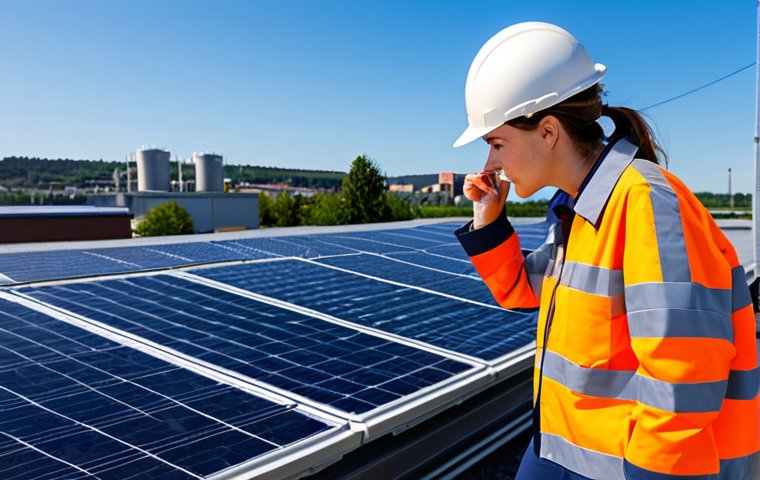
But it’s far from simple. We’re not just tacking on solar panels; we’re talking about sophisticated battery storage solutions, microgrids that can operate independently or alongside the main grid, and complex bidirectional power flows that require entirely new approaches to design and control.
I’ve been involved in projects where the sheer complexity of managing fluctuating renewable inputs while maintaining grid stability was a monumental challenge, requiring deep expertise in power electronics and advanced control systems.
It’s a field that demands continuous learning because the technology and best practices are evolving at a breakneck pace.
1. Grid Interconnection and Microgrid Design
Connecting a renewable energy source to the existing electrical grid, or designing a self-sufficient microgrid for a campus or large facility, involves a detailed understanding of synchronization, voltage regulation, and fault protection.
You need to ensure that when your solar array is generating power, it’s doing so in perfect harmony with the utility grid, or that your microgrid can seamlessly island itself during an outage.
This includes specifying inverters, transformers, switchgear, and protective relays that can handle the dynamic nature of renewable generation. The challenges are real, but the satisfaction of seeing a building power itself, or even feed excess energy back to the grid, is immense.
2. Energy Storage Solutions and Their Critical Role
Battery energy storage systems (BESS) are no longer a luxury; they’re a cornerstone of effective renewable integration. They allow us to store excess energy generated during peak production times (like midday for solar) and discharge it during peak demand or when renewables aren’t active.
This smooths out power fluctuations, enhances grid stability, and unlocks opportunities for demand charge management. Understanding battery chemistries, charge/discharge cycles, thermal management, and safety protocols for large-scale battery banks is absolutely vital.
I’ve seen firsthand how a well-designed BESS can make a seemingly intermittent renewable source behave like a reliable, dispatchable power plant.
Safeguarding the Grid: Cybersecurity for Modern Electrical Infrastructure
Here’s something that wasn’t even on the radar when I was starting out: the critical importance of cybersecurity for electrical systems. Our buildings are no longer isolated structures; they’re part of a vast, interconnected network.
From smart meters to networked building management systems (BMS) and even critical infrastructure like substations, everything is increasingly digital and IP-addressable.
This connectivity, while offering incredible efficiencies, also introduces significant vulnerabilities. A cyber-attack on a building’s electrical system isn’t just about data theft; it could lead to widespread blackouts, system malfunctions, or even physical damage.
I’ve had conversations with facility managers who are genuinely terrified of ransomware attacks freezing their entire operational control systems. It’s a stark reminder that as electrical engineers, our responsibility now extends far beyond ohms and amps into the realm of firewalls and encryption.
You have to think like a hacker to design defenses effectively.
1. Protecting Building Management Systems (BMS) and Operational Technology (OT)
The convergence of IT (Information Technology) and OT (Operational Technology) is a double-edged sword. While it offers unparalleled control and data insights, it also means that the same vulnerabilities that plague corporate networks can now impact physical infrastructure.
Securing a BMS involves understanding network segmentation, intrusion detection systems, secure remote access, and robust authentication protocols. It’s not just about protecting data; it’s about ensuring the physical safety and operational continuity of a building.
I’ve personally been involved in audits where simple default passwords on crucial control devices were identified, highlighting just how far we still have to go in some areas.
2. Compliance and Risk Management in a Digital Landscape
The regulatory landscape around cybersecurity for critical infrastructure is rapidly evolving. Standards like IEC 62443, NIST Cybersecurity Framework, and various industry-specific guidelines are becoming mandatory for many projects.
As an engineer, you’re not just designing systems; you’re also ensuring they meet stringent cybersecurity compliance requirements. This involves conducting risk assessments, developing incident response plans, and implementing secure coding practices for any custom control logic.
It’s a continuous battle against increasingly sophisticated threats, and staying informed is key to building truly resilient systems.
Predictive Power: AI and Machine Learning in Facilities Management
If you think AI is just for self-driving cars or chatbots, you’re missing a massive wave that’s washing over the built environment sector. Machine learning, in particular, is revolutionizing how we manage and maintain electrical systems within buildings.
Imagine systems that learn patterns of energy consumption, predict equipment failures before they occur, or even optimize lighting and HVAC based on real-time occupancy and weather forecasts, all without human intervention.
This isn’t science fiction; it’s happening right now. I’ve seen this personally in large commercial complexes where AI-driven platforms dynamically adjust power loads, leading to incredible energy savings and reduced operational costs.
It moves us from reactive troubleshooting to truly proactive, intelligent management, freeing up valuable human capital for more complex strategic tasks.
The ability to interpret and leverage this data, and even design systems that can learn, is becoming an indispensable skill.
1. Optimizing Energy Usage with Adaptive Algorithms
AI algorithms can analyze vast datasets of historical energy consumption, weather patterns, occupancy schedules, and even real-time utility pricing to make intelligent decisions about power usage.
For example, a machine learning model can predict the optimal time to pre-cool a building before peak demand charges kick in, or adjust lighting levels based on natural light availability, ensuring comfort while minimizing waste.
My own experience with implementing such systems has shown that the efficiency gains are not marginal; they are substantial, often surprising even the most experienced facility managers with their precision.
2. Revolutionizing Maintenance with Machine Learning Diagnostics
This is where AI truly shines for operational reliability. Instead of relying on time-based maintenance schedules, machine learning models analyze sensor data from pumps, motors, transformers, and switchgear to detect subtle anomalies that indicate impending failure.
They can identify patterns that humans might miss, like slight increases in vibration or minor current fluctuations, and issue alerts long before a catastrophic breakdown occurs.
This capability to predict component failure not only extends equipment lifespan but also drastically reduces unexpected downtime and associated repair costs.
It’s a game-changer for critical facilities where continuous operation is paramount. Here’s a quick look at how traditional and modern approaches compare:
| Aspect | Traditional Electrical Engineering | Modern Smart Building Electrical Engineering |
|---|---|---|
| Primary Focus | Power distribution, safety codes, basic lighting/HVAC controls. | Integrated systems, energy efficiency, data analytics, occupant comfort, cybersecurity. |
| Key Technologies | Relays, circuit breakers, manual switches, fixed wiring. | IoT sensors, AI/ML platforms, wireless protocols, cloud connectivity, advanced BMS. |
| Maintenance Approach | Reactive (fix when broken), time-based scheduled maintenance. | Predictive maintenance using data, remote diagnostics, condition monitoring. |
| Energy Management | Static scheduling, simple ON/OFF controls. | Dynamic optimization, demand response, renewable energy integration, storage. |
| Role of Data | Limited to readings for troubleshooting. | Central to decision-making, performance analysis, and automation. |
Beyond Codes: The Soft Skills Essential for Tomorrow’s Electrical Engineer
It’s easy to get caught up in the technical wizardry of modern electrical engineering, but I’ve personally seen that mastering the technical side is only half the battle.
The truly successful engineers in today’s rapidly evolving landscape possess a robust set of soft skills that enable them to navigate complex projects, collaborate effectively, and communicate intricate technical concepts to diverse audiences.
Gone are the days when an engineer could just sit behind a desk and crunch numbers. We’re now integral parts of multidisciplinary teams, interacting with architects, IT specialists, facility managers, and even end-users.
The ability to articulate your designs, persuade stakeholders, and adapt to unforeseen challenges is just as critical as knowing the latest NEC code. If you’re only focusing on the equations, you’re missing a crucial piece of the puzzle that differentiates a good engineer from a truly outstanding one.
1. Effective Communication Across Disciplines
In an integrated project environment, you’re constantly speaking with people who don’t share your engineering vocabulary. You might need to explain the implications of a power quality issue to an architect focused on aesthetics, or detail the cybersecurity requirements of a system to a non-technical building owner.
This requires translating complex technical jargon into clear, concise language that resonates with your audience. I’ve found that my ability to simplify intricate concepts has often been the key to getting a project approved or solving a cross-functional problem efficiently.
2. Adaptability and Continuous Learning
The pace of technological change in our field is staggering. What was cutting-edge last year might be standard or even obsolete next year. This means that a commitment to continuous learning and an inherent adaptability are non-negotiable.
You can’t just rely on what you learned in university or even ten years ago. It’s about actively seeking out new information, attending industry seminars, diving into emerging technologies, and embracing new design methodologies.
The engineers who thrive are those who see every new challenge as an opportunity to expand their knowledge and skill set.
Resilience and Sustainability: Designing for a Future-Proof Built Environment
The twin pillars of resilience and sustainability have moved from aspirational goals to fundamental design imperatives. Climate change, increasing energy costs, and the desire for greater operational independence are driving a fundamental rethinking of how we design electrical systems.
It’s no longer just about making a building work; it’s about making it work efficiently, minimizing its environmental footprint, and ensuring it can withstand disruptions, whether from natural disasters or grid instability.
I’ve been personally involved in projects where the client’s primary driver was not just cost, but creating a building that could essentially “weather the storm,” both literally and figuratively.
This requires a holistic approach, where every design decision, from material selection to power system architecture, is evaluated through the lens of long-term environmental and operational impact.
1. Designing for Grid Independence and Backup Power
In an era of increasing grid fragility, the ability for a building to maintain critical operations during an outage is paramount. This isn’t just about simple generators anymore; it’s about sophisticated backup power systems that might integrate renewables, battery storage, and even EV charging infrastructure to create truly resilient microgrids.
Understanding how to seamlessly transition between grid power and islanded operation, ensuring power quality and stability throughout, is a complex but crucial design challenge.
My own work has often involved meticulously planning these fail-safe systems, knowing that lives and critical data could depend on their flawless operation.
2. Embracing Circular Economy Principles and Energy Efficiency Beyond Codes
Sustainability in electrical engineering goes beyond just meeting minimum energy codes. It involves considering the entire lifecycle of electrical components, from embodied carbon in manufacturing to recyclability at end-of-life.
It’s about designing systems that are inherently energy-efficient, not just through better components, but through intelligent control and optimization.
This means exploring passive design strategies that reduce electrical loads, specifying highly efficient motors and lighting, and integrating intelligent controls that prevent energy waste.
It’s a mindset that seeks to minimize resource consumption and environmental impact at every stage.
Unpacking the Digital Twin Revolution in Electrical Design
This is one of the most exciting developments I’ve seen in recent years, and it’s quickly becoming indispensable for complex projects. The concept of a “digital twin”—a virtual replica of a physical building and its electrical systems—allows us to simulate, analyze, and optimize designs long before a single wire is laid.
Imagine being able to run complex power flow simulations, test different energy management strategies, or even predict the thermal performance of a data center without building a single physical prototype.
I’ve personally used digital twins to identify potential bottlenecks in electrical distribution, optimize cable routing, and even visualize maintenance pathways in ways that traditional 2D drawings simply can’t achieve.
It’s an incredibly powerful tool that reduces risks, saves costs, and significantly improves the quality and efficiency of electrical designs. It’s like having a crystal ball for your project.
1. Virtual Prototyping and Performance Simulation
Before digital twins, much of our design validation relied on calculations and assumptions, with real-world issues often only emerging during construction or commissioning.
Now, we can build a highly accurate virtual model of the electrical system, populated with real-time data from equipment specifications and operational parameters.
This allows us to run dynamic simulations for power flow, fault analysis, voltage drop, and even thermal performance under various load conditions. The ability to identify and rectify design flaws in a virtual environment, rather than on a costly construction site, is an absolute game-changer.
2. Lifecycle Management and Predictive Maintenance through Digital Twins
The benefits of a digital twin extend far beyond the design phase. Once a building is operational, the digital twin can be continuously updated with real-time data from sensors and control systems, effectively becoming a living model of the building’s electrical infrastructure.
This enables predictive maintenance by modeling equipment degradation, optimizing operational strategies based on actual performance, and even planning future upgrades with far greater accuracy.
It’s a persistent, intelligent record that informs every decision throughout the building’s lifespan, transforming asset management from reactive to highly proactive.
Closing Thoughts
So, if you’re an electrical engineer, or aspiring to be one, this isn’t just about adapting; it’s about leading. The landscape is exhilarating, full of challenges, yes, but even more opportunities.
Embrace these changes, deepen your understanding of these converging technologies, and cultivate those crucial soft skills. The future of our built environment is literally in our hands, and it’s going to be intelligently connected, remarkably efficient, and incredibly resilient.
What an exciting time to be in this field!
Useful Information
1. Engage with Industry Communities: Join professional organizations like IEEE or local engineering societies. Networking isn’t just about finding jobs; it’s about staying current with industry trends and sharing knowledge with peers.
2. Pursue Specialized Certifications: Consider adding certifications in niche areas like cybersecurity for Operational Technology (OT), LEED or WELL Building standards for sustainable design, or specific IoT platform expertise. These can significantly boost your marketability and demonstrate your commitment to modern practices.
3. Prioritize Hands-On Learning: Don’t underestimate the value of internships, co-op programs, or even personal projects. There’s no substitute for real-world project experience, even if it starts with basic practical applications.
4. Broaden Your Knowledge Base: Electrical engineering in smart buildings is inherently interdisciplinary. Brush up on adjacent fields like IT networking, basic data science, or even architectural design principles. Understanding the full ecosystem is key to effective integration.
5. Cultivate Lifelong Learning: The pace of technological evolution in this field is relentless. The most successful engineers I know are relentlessly curious – they read industry journals, follow thought leaders, and always ask “what’s next?”
Key Takeaways
The electrical engineering field is undergoing a profound transformation. Key shifts include the convergence of IoT and smart building systems, the imperative of renewable energy integration, the non-negotiable role of cybersecurity, and the power of AI/ML in facilities management.
Beyond technical acumen, soft skills like communication and adaptability are vital. Designing for resilience, sustainability, and leveraging digital twin technology are no longer optional but essential for creating future-proof infrastructure.
Frequently Asked Questions (FAQ) 📖
Q: Given the unprecedented speed of change in our built environment, what’s the most crucial area an aspiring Electrical Equipment Engineer should focus on right now to truly thrive, not just pass a certification?
A: Honestly, if I had to pick just one, it’s the integration of everything. It’s no longer about isolated systems; it’s about understanding how AI-driven building management systems orchestrate everything from lighting to HVAC, how IoT devices are constantly feeding data for energy optimization, and critically, how robust cybersecurity measures are safeguarding these interconnected networks.
I mean, thinking about the predictive maintenance fueled by machine learning that tells you a piece of equipment is about to fail, not just when it does, that’s where the game truly is now.
Forget just knowing basic circuitry; you need to grasp how a smart grid interacts with a commercial building’s microgrid, or how data analytics inform every design choice.
It’s a complete shift, and if you’re not getting how all these pieces fit together, you’re missing the big picture.
Q: How does the practical reality of working on a modern construction site or building project differ from what might be covered in more traditional, even slightly older, exam prep materials?
A: Oh, it’s like night and day, truly. I remember grinding through textbooks, feeling confident I had the core concepts down – load calculations, basic layouts, the usual.
But then you step onto a site today, and it’s just… different. You’re not just pulling wire; you’re troubleshooting network-controlled lighting systems that integrate with occupancy sensors and daylight harvesting.
You’re actively discussing the power requirements for a server farm that’s running the building’s entire AI backbone. Or, even more recently, talking about the nuances of integrating substantial battery storage solutions for peak shaving, a concept that was barely a footnote when I was prepping years ago.
The shift isn’t just theoretical; it’s in the daily conversations, the challenges, the problems you’re hired to solve. It’s less about static design and more about dynamic, adaptive systems that are always optimizing.
The “basic circuitry” knowledge is still your foundation, absolutely, but it’s just the very tip of a profoundly complex, ever-evolving iceberg of practical application.
Q: Beyond just passing the certification exam, what’s the real, tangible career benefit of deeply understanding these cutting-edge developments, especially in terms of long-term professional relevance and opportunities?
A: This is where it genuinely hits home for me. Passing the exam gets your foot in the door, sure, but really, deeply understanding these bleeding-edge developments – that’s what makes you indispensable in this field right now.
I’ve personally watched brilliant engineers, who were once absolutely at the top of their game, start to lag because they stuck too rigidly to the “old ways.” They struggle to even understand project specifications that are steeped in IoT integration or advanced analytics.
Conversely, I’ve seen younger engineers, or even seasoned pros who embraced the learning curve, absolutely thrive. They’re the ones leading the charge on innovative, high-profile projects, commanding higher salaries, and frankly, just feeling more confident and relevant in their roles.
It’s not just about a piece of paper; it’s about being a proactive, highly valued problem-solver in a market that’s constantly throwing new, complex electrical challenges at us.
It’s about ensuring you’re not just employed, but truly sought after. In this rapidly evolving landscape, those who aren’t on top of this stuff are, quite simply, going to get left behind.
📚 References
Wikipedia Encyclopedia
구글 검색 결과
구글 검색 결과
구글 검색 결과
구글 검색 결과
구글 검색 결과